What is Project Perfect and who is it built for?
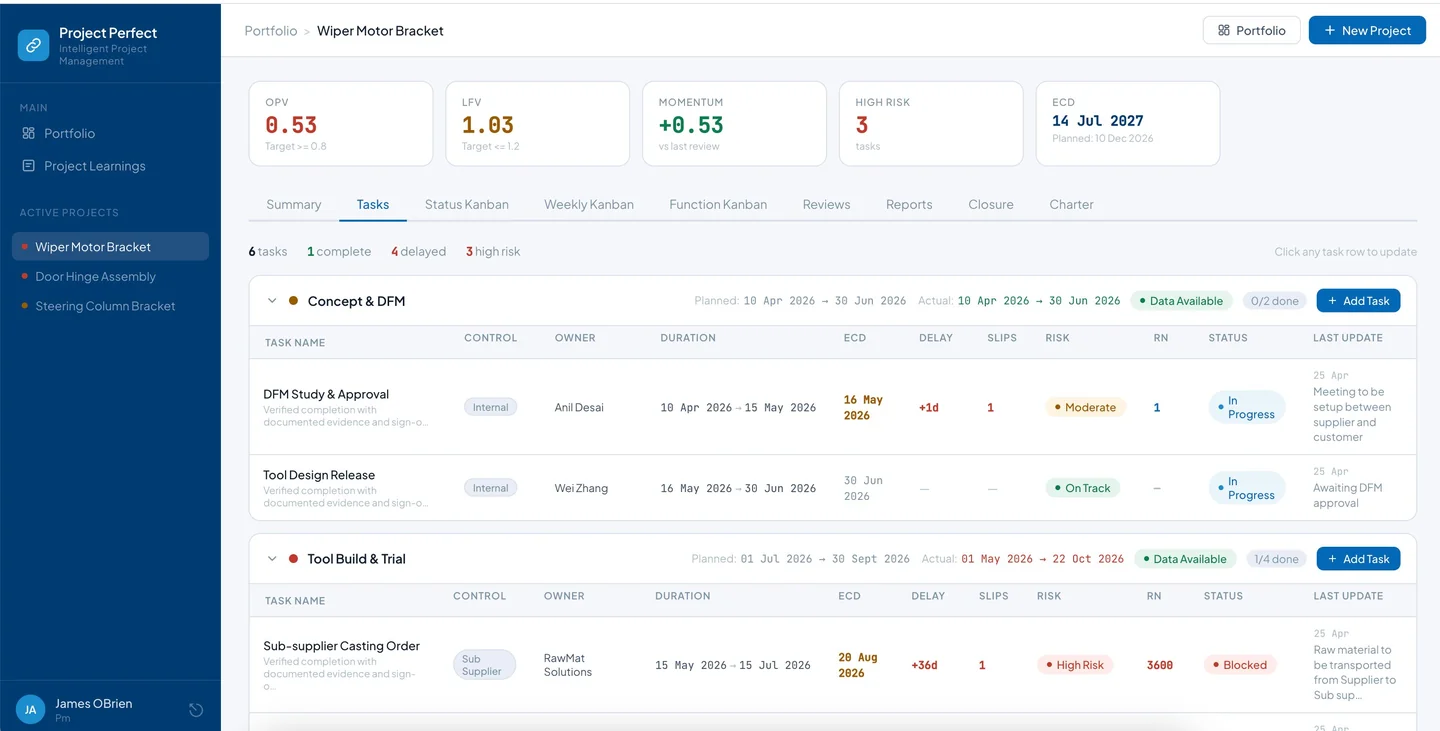
Project Perfect is manufacturing project management software with built-in early warning intelligence, built exclusively for manufacturing companies. It is designed for programme managers, operations heads, and quality directors at Tier 1 and Tier 2 suppliers across automotive, industrial, aerospace, and capital equipment manufacturing. If your business runs APQP, PPAP, or NPI programmes and you want to catch delivery risk while there's still time to act, this was built for you.
How is Project Perfect different from Jira, Smartsheet, MS Projects or generic project management tools?
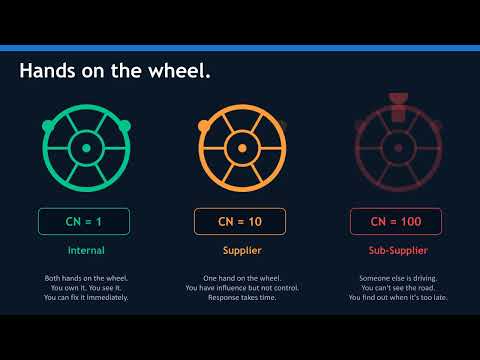
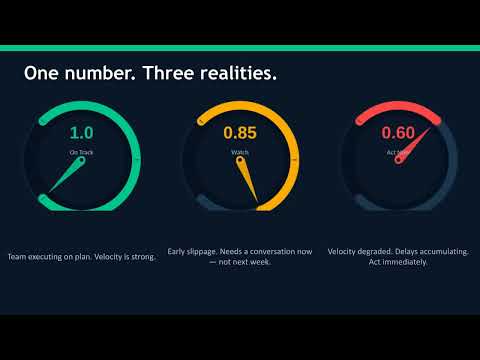
Generic tools were not built for manufacturing teams. They track tasks. They do not understand manufacturing programme risk, supply chain dependencies, or what it means when a sub-component misses a milestone in an APQP phase gate. Project Perfect was built by someone with 25 years inside manufacturing programmes — not adapted from a software tool. The difference is not features. It is context. Every risk algorithm, every health score, every alert is calibrated for the way manufacturing projects actually fail — not the way software sprints fail.
Does it support APQP and PPAP workflows as per AIAG standards?
Yes. Project Perfect is designed around the realities of APQP phase gate management and PPAP submission tracking as defined by AIAG standards. Risk flags, milestone accountability, and supplier dependency tracking are all aligned to how Tier 1 and Tier 2 automotive suppliers actually run new product introduction programmes. If your customer is an OEM expecting AIAG-compliant programme governance, Project Perfect gives your team the structure to deliver it.
Which manufacturing verticals does it serve?
Project Perfect is built for any manufacturing business running complex, multi-stakeholder programmes with external dependencies and high consequence delivery commitments. Current verticals include automotive supply chain, industrial machinery, aerospace components, defence components, oil and gas equipment, and capital projects. The common thread is not the industry — it is the cost of a missed delivery.
How long does onboarding take?
Less than one week from your first conversation to your first live project running inside the platform. We do the heavy lifting — workspace configuration, team onboarding, and first project setup. You do not need an IT project to get started. You need one conversation.
What does it cost?
Project Perfect is priced starting from $299 per user per month (minimum 5 users) plus a one-time implementation fee. The annual subscription includes unlimited projects, full platform access. To put it in context — it is less than the monthly fully-loaded cost of a single programme manager on your team, and a fraction of what one missed customer delivery costs you in revenue, recovery, and reputation. Every engagement is scoped individually. Book a conversation and we will give you a clear number upfront.
Can Project Perfect be customised for our specific workflows and processes?
Yes. Every manufacturing organisation runs programmes differently — different phase gate structures, different supplier hierarchies, different escalation rhythms. Project Perfect can be configured to match your specific workflow architecture, reporting requirements, and programme governance model. Customisation scope is defined during the implementation phase and priced accordingly.
What implementation support do you provide?
Implementation is not a hand-off. We work alongside your team from day one — configuring your workspace, mapping your existing programme structure into the platform, onboarding your team, and running your first live project with you. We do not send you a user manual and disappear.
What ongoing support do you receive after go-live?
Support does not stop at go-live. Every Project Perfect client has direct access to our team of manufacturing programme experts for questions, configuration changes, and platform guidance. This is not a ticket queue. It is direct access to practitioners who have run the kind of programmes you are managing.
Do you provide consulting beyond the platform?
Yes. For clients who need it, we offer programme consulting alongside the platform — covering risk framework design, APQP programme governance, supplier escalation protocols, and executive review structures. This is not generic project management consulting. It is manufacturing programme consulting delivered by practitioners who have run these programmes inside global OEM supply chains.
What results have other manufacturing companies seen?
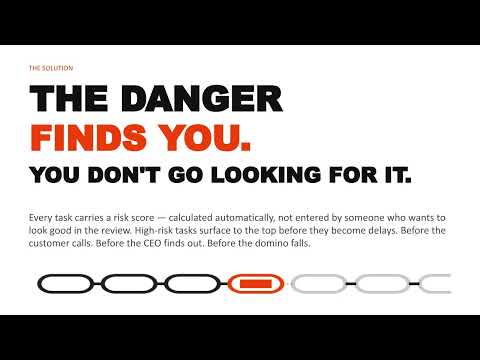
Programme managers using Project Perfect surface critical risks 3 to 4 weeks earlier than they would through conventional status tracking. Teams save an average of 10 hours per week per PM — time previously spent assembling status from spreadsheets, WhatsApp threads, and chasing updates.
How quickly do we see value?
Within two weeks of go-live. The moment your first live project is running inside the platform, the risk ranking starts working. Most programme managers describe their first risk flag as their this-is-real moment. It typically happens within the first two weeks of going live. From that point, every review meeting changes.